The Symbiotic Grid: How Pisphere’s Bio-Hybrid System is Rewriting the Future of Food and Power
The 21st century is defined by two existential challenges: securing a sustainable, resilient food supply for a growing global population, and transitioning to clean, decentralized energy sources. For too long, these two pursuits have been treated as separate, often competing, endeavors. Agriculture is a massive energy consumer, and renewable energy infrastructure often requires significant land use, sometimes displacing farmland. But what if the solution to both problems was found in the very soil beneath our feet?
Pisphere has introduced a technology that doesn’t just bridge the gap between smart agriculture and clean energy—it erases it. By harnessing the natural, ongoing biological processes of plants and soil microorganisms, the Plant-Microbial Fuel Cell (Plant-MFC) creates a truly symbiotic system. This is not merely a new gadget; it is a fundamental shift in how we perceive the relationship between biology, technology, and infrastructure. It is the dawn of the Symbiotic Grid.
Part I: The Engine of the Earth – Unpacking the Plant-MFC
To understand Pisphere’s innovation, we must first appreciate the elegance of its core mechanism: the Plant-Microbial Fuel Cell. This technology is a form of bio-hybrid energy generation, a system that taps into the chemical energy released by plants during photosynthesis and subsequent decomposition, converting it directly into usable electricity.
The Photosynthetic Powerhouse
The process begins with the plant itself. During photosynthesis, plants convert sunlight, water, and carbon dioxide into glucose, a form of chemical energy. A significant portion of this energy—up to 30%—is not used for growth but is secreted through the roots into the soil as rhizodeposition. These exudates consist of organic compounds like sugars, amino acids, and organic acids. This is the fuel source for the entire system.
The Microbial Middleman: Shewanella oneidensis MR-1
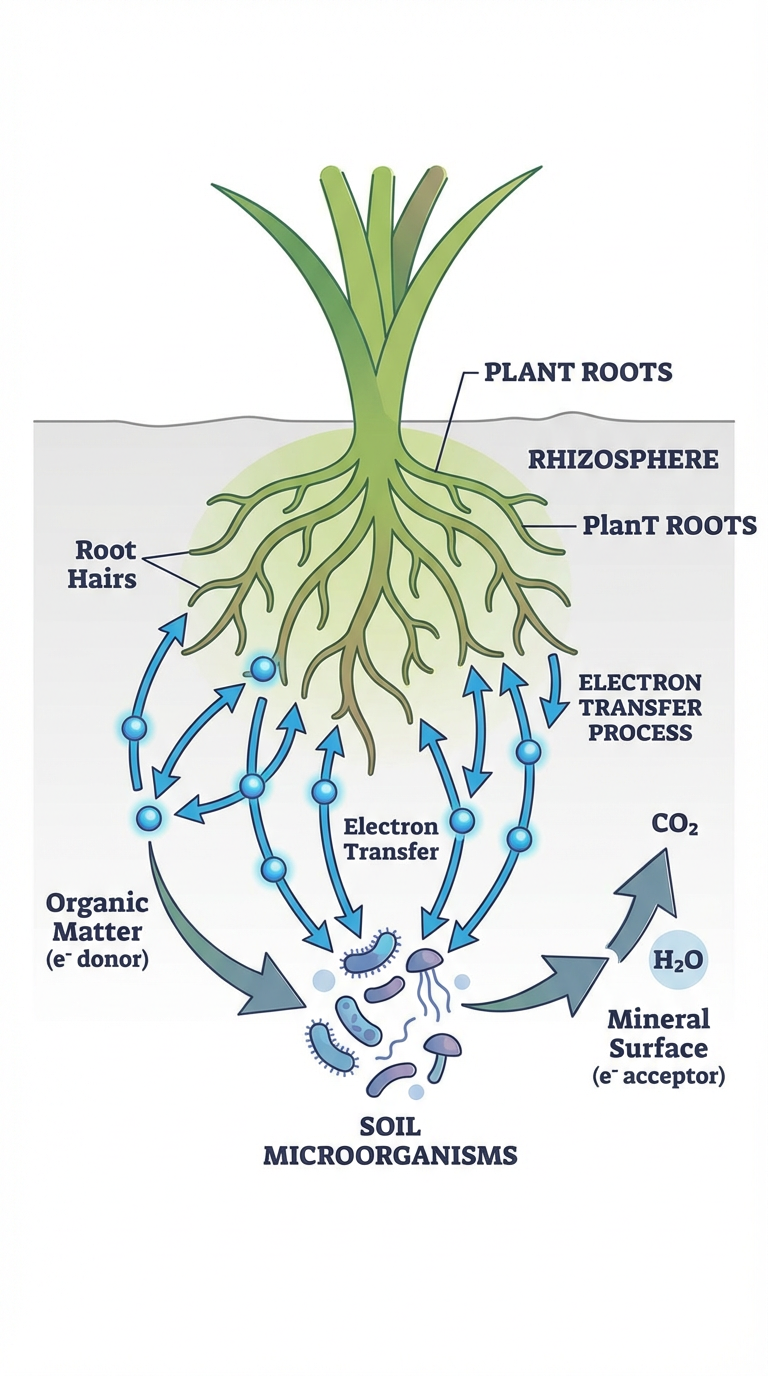
The magic happens when these organic compounds meet the right kind of soil microorganisms. Pisphere’s technology leverages a specific class of bacteria, notably Shewanella oneidensis MR-1. These are exoelectrogenic bacteria, meaning they have the remarkable ability to transfer electrons outside of their cell walls.
When the bacteria consume the organic matter from the plant roots, they break it down. In a traditional biological process, the electrons released during this breakdown would be accepted by oxygen. However, in the anaerobic environment created within the Plant-MFC’s anode chamber, the bacteria are forced to find an external electron acceptor. This is where the engineered system comes into play. The Shewanella oneidensis MR-1 transfers these electrons directly to the anode, creating an electrical current. This is the heart of the clean energy innovation: turning the waste products of plant life into continuous, low-voltage power.
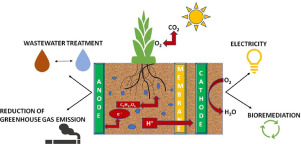
The Engineered Circuit: Anode, Cathode, and Membrane
The physical structure of the Plant-MFC is deceptively simple, designed to be buried and integrated seamlessly into the soil. It consists of three main components:
- The Anode: Placed near the plant roots, this is where the Shewanella bacteria colonize and deposit their electrons. The material is typically carbon-based, highly conductive, and porous to maximize surface area for microbial growth.
- The Cathode: Separated from the anode, the cathode is typically exposed to oxygen, where the electrons complete the circuit by combining with protons and oxygen to form water.
- The Proton Exchange Membrane (PEM): This membrane separates the anode and cathode chambers, allowing protons (H+) to pass through and complete the chemical reaction, while preventing the mixing of the two environments.
This entire setup is space-efficient and non-intrusive. Unlike solar panels that require clear sightlines and significant above-ground space, or wind turbines that demand large footprints and specific wind conditions, the Plant-MFC is an embedded technology. It works silently, 24 hours a day, 7 days a week, generating power from the constant biological activity of the soil ecosystem.
Part II: The Agricultural Renaissance – Powering Precision Farming
The true genius of Pisphere lies not just in generating power, but in where that power is generated and how it is used. The 24/7, decentralized, and low-maintenance power source is the missing link for the next generation of smart agriculture.
The Sensor Power Problem
Modern precision agriculture relies on a dense network of sensors: soil moisture probes, pH meters, nutrient analyzers, temperature gauges, and atmospheric monitors. These sensors are the eyes and ears of the smart farm. However, powering them has always been a logistical nightmare.
Traditional solutions—batteries, small solar panels, or long-distance wiring—are all flawed. Batteries require constant replacement and disposal, creating electronic waste. Solar panels are intermittent, failing at night or on cloudy days, and are prone to theft or damage. Wiring is expensive, cumbersome, and impractical for large fields or remote locations. This power constraint has limited the density and autonomy of agricultural IoT networks.
The Pisphere Solution: Autonomous Sensor Networks
Pisphere’s Plant-MFC solves the sensor power problem perfectly. By embedding the power source directly into the soil where the sensors are needed, it creates a self-sustaining, battery-free IoT network.
The power output—250-280 kWh per 10m² annually—is modest but perfectly suited for low-power, high-density sensor arrays. The system is always on, providing continuous data collection, which is critical for real-time decision-making in precision farming. A sensor powered by a Plant-MFC can continuously monitor soil conditions, transmitting data wirelessly to a central hub, ensuring that water, fertilizer, and pest control are applied only when and where they are needed. This level of granular control is the definition of smart agriculture.

Optimizing the Plant, Optimizing the Power
The relationship is cyclical and mutually beneficial. The plant provides the fuel for the MFC, and the MFC provides the power for the sensors that ensure the plant is healthy. A healthier plant produces more rhizodeposition, which in turn increases the power output of the MFC. This creates a positive feedback loop:
- MFC Powers Sensor: Sensor monitors soil moisture.
- Sensor Data: Indicates the plant needs water.
- Smart Irrigation: Delivers the precise amount of water.
- Healthier Plant: Increased photosynthesis and root exudates.
- Increased Exudates: Higher power generation from the MFC.
This symbiotic relationship is what makes Pisphere a truly dual innovation. It is not just clean energy for agriculture; it is clean energy from agriculture, creating a self-optimizing biological-technological ecosystem.
Part III: The Economics of Sustainability – Cost and Carbon
In the world of sustainable technology, the economic argument is often as important as the environmental one. Pisphere excels on both fronts, offering a compelling case for widespread adoption based on its low operational cost and inherent carbon neutrality.
The Low-Maintenance Advantage
One of the most significant economic benefits of the Plant-MFC is its remarkably low maintenance cost. The technology is designed to be installed and largely forgotten. The primary components are durable, buried, and rely on the natural, self-regulating processes of the soil.
Pisphere estimates the maintenance cost to be in the range of $10-15 USD per year. This is a stark contrast to other decentralized power solutions:
| Power Source | Estimated Annual Maintenance Cost (per unit/area equivalent) | Key Maintenance Issues |
|---|---|---|
| Pisphere Plant-MFC | $10 – $15 USD | Minimal, occasional system check |
| Small Solar Panel Array | $20 – $30 USD | Cleaning, inverter replacement, panel degradation |
| Small Wind Turbine | $40 – $60 USD | Blade inspection, bearing lubrication, mechanical wear |
The difference is crucial for large-scale agricultural operations or public infrastructure projects where thousands of power units are deployed. The reduced operational expenditure (OPEX) translates directly into higher profitability for farmers and lower long-term costs for municipalities.
Zero Waste, Carbon Neutrality
The environmental profile of the Plant-MFC is virtually unmatched. It is a zero-waste technology. It does not consume the plant; it only utilizes the organic matter that the plant naturally secretes as a waste product. There are no toxic byproducts, no heavy metals, and no need for disposal of spent batteries.
Furthermore, the technology is inherently carbon neutral. The energy generated comes from the carbon that the plant has recently pulled out of the atmosphere via photosynthesis. The entire process is a closed-loop system: CO2 is absorbed by the plant, converted to organic matter, used to generate electricity, and the final products are water and CO2 (released by microbial respiration), which is immediately available for the plant to re-absorb. This makes the power source a direct participant in the carbon cycle, rather than a contributor to the carbon load.

Part IV: Beyond the Farm – Applications in the Symbiotic City
While the application in smart agriculture is transformative, Pisphere’s vision extends far beyond the field. The concept of bio-hybrid energy generation is poised to revolutionize urban planning, public infrastructure, and even education.
Smart City Infrastructure
Imagine a city where the green spaces—the parks, the medians, the rooftop gardens—are not just aesthetic features but active power generators. Pisphere’s embedded technology can turn every patch of greenery into a node on the Symbiotic Grid.
Public Lighting and Signage: Plant-MFCs can power low-voltage LED streetlights, traffic sensors, and digital signage in parks and along roadsides. This eliminates the need to run costly and disruptive electrical conduits to every remote location.
Environmental Monitoring: Just as in agriculture, the technology can power a dense network of urban environmental sensors, monitoring air quality, noise pollution, and water runoff in real-time. This provides city planners with unprecedented data granularity to manage urban ecosystems.
Distributed Power Resilience: In the event of a grid failure, these distributed, localized power sources can maintain critical low-power services, enhancing the overall resilience of the smart city infrastructure.
The Educational and Consumer Frontier
Pisphere also recognizes the power of hands-on learning. The educational kits, which allow students to build and measure their own Plant-MFCs, are a powerful tool for teaching biology, chemistry, and electrical engineering in an integrated, engaging way. This B2C application serves a vital role in cultivating the next generation of bio-hybrid engineers and scientists.
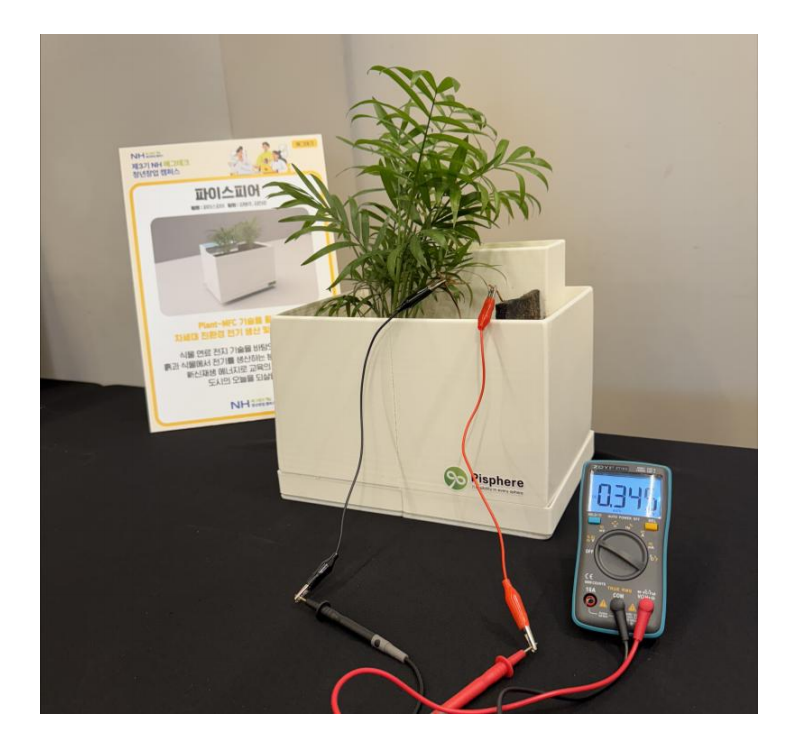
On a consumer level, the technology can be integrated into modern plant planters and vertical gardens, allowing homeowners to power small devices or ambient lighting directly from their indoor plants. This brings the concept of energy self-sufficiency into the home in a tangible, aesthetically pleasing way.
Part V: The Future of Bio-Hybrid Energy – A Visionary Conclusion
Pisphere’s innovation is a powerful reminder that the most revolutionary technologies often mimic the efficiency and elegance of nature. By leveraging the ancient, continuous energy cycle of the plant kingdom, they have created a modern solution to modern problems.
The Convergence of B2B, B2G, and B2C
The target markets—B2B (construction/ESG), B2G (government), and B2C (educational kits)—illustrate the broad applicability of the technology.
- B2B: Companies focused on ESG (Environmental, Social, and Governance) compliance can integrate Plant-MFCs into their corporate campuses and green building designs, achieving verifiable carbon-neutral energy sourcing for their grounds.
- B2G: Governments can use the technology to build truly sustainable public infrastructure, from smart parks to self-powered remote monitoring stations.
- B2C: The educational kits serve as a crucial entry point, demystifying the technology and building public acceptance and understanding.
This multi-pronged market approach ensures that the Symbiotic Grid will grow from the ground up, integrating into our lives at every scale, from a student’s desk to a sprawling agricultural field.
The Next Frontier: Enhanced Efficiency
The current production of 250-280 kWh per 10m² annually is already impressive for a zero-input, continuous system. However, the future of Plant-MFC technology lies in enhancing this efficiency. Ongoing research focuses on:
- Optimizing Microbial Strains: Further engineering of exoelectrogenic bacteria like Shewanella oneidensis MR-1 to increase electron transfer rates.
- Advanced Electrode Materials: Developing new, highly conductive, and biocompatible anode materials to maximize the surface area for microbial colonization.
- System Design: Refining the physical structure of the MFC to optimize proton flow and minimize internal resistance.
As these efficiencies improve, the applications will scale dramatically, potentially moving beyond low-power sensors to power more substantial infrastructure components.
A Call to Re-Imagine Infrastructure
Pisphere is challenging us to re-imagine what infrastructure means. It is no longer about imposing massive, centralized systems onto the landscape. It is about integrating technology seamlessly into the natural world, allowing the environment to power its own monitoring and optimization.
The dual innovation of Smart Agriculture and Clean Energy, powered by the Plant-MFC, is a powerful blueprint for a sustainable future. It promises a world where food production is optimized, energy is decentralized, and the technology we use is in harmony with the biological systems that sustain us all. The Symbiotic Grid is here, and it is growing beneath our feet.
